
One of the first questions we hear from companies planning a video is, “How long will this take?”
It is a fair question, especially when the video needs to support a website launch, conference, campaign, recruiting effort, or important company announcement.
For most professional corporate videos, a realistic timeline is about 4 to 8 weeks from the initial planning conversation through final delivery. A straightforward interview or testimonial video may move faster. A larger brand video involving several locations, multiple filming days, scripted scenes, talent, animation, or several decision makers may take 8 to 12 weeks or longer.
The filming itself is often only 1 or 2 days. Most of the schedule is shaped by the planning before the shoot and the review process after it.
After producing videos for companies in Orlando and across Florida for more than 21 years, we have learned that the smoothest projects are not always the smallest. They are the ones where everyone understands the process, knows who is responsible for approvals, and makes important decisions early.
Here is what a typical corporate video production timeline really looks like.
A Typical Corporate Video Takes 4 to 8 Weeks
Every project is different, but most corporate productions move through 3 main stages:
- Preproduction and planning: 1 to 3 weeks
- Filming: 1 to 3 days
- Editing, review, and final delivery: 2 to 5 weeks
A simple executive interview with supporting office footage could be completed in 2 to 3 weeks when schedules and approvals move quickly. A more involved brand story or commercial campaign can require several months of planning.
That does not mean the production team is working on one video every day for 8 straight weeks. The timeline includes scheduling, location coordination, script approvals, interview preparation, editing, internal review, requested revisions, final exports, and delivery.
If you are still determining the right scope for your budget, our guide to video production costs in Orlando can help you understand how crew size, filming days, locations, and deliverables affect the overall investment.
Stage 1: Discovery and Project Planning
Typical timeline: 2 to 5 business days
Every successful project starts with a clear conversation about what the video needs to accomplish.
Before discussing cameras or filming locations, we want to understand the audience, message, intended platforms, deadline, and desired action. A homepage brand video has a different job than an internal training video. A customer testimonial requires a different approach than a scripted commercial.
During this stage, we usually clarify:
- The main purpose of the video
- Who needs to see it
- Where it will be used
- The desired length and format
- Whether interviews, scripting, actors, or voiceover are needed
- How many locations and filming days may be involved
- Which final versions and social edits are required
- The target completion date
Clear answers at the beginning allow the production team to create the right scope and prevent avoidable changes later.
Stage 2: Preproduction
Typical timeline: 1 to 3 weeks
Preproduction is where the project takes shape. It is also where much of the real work happens, even though the cameras have not started rolling.
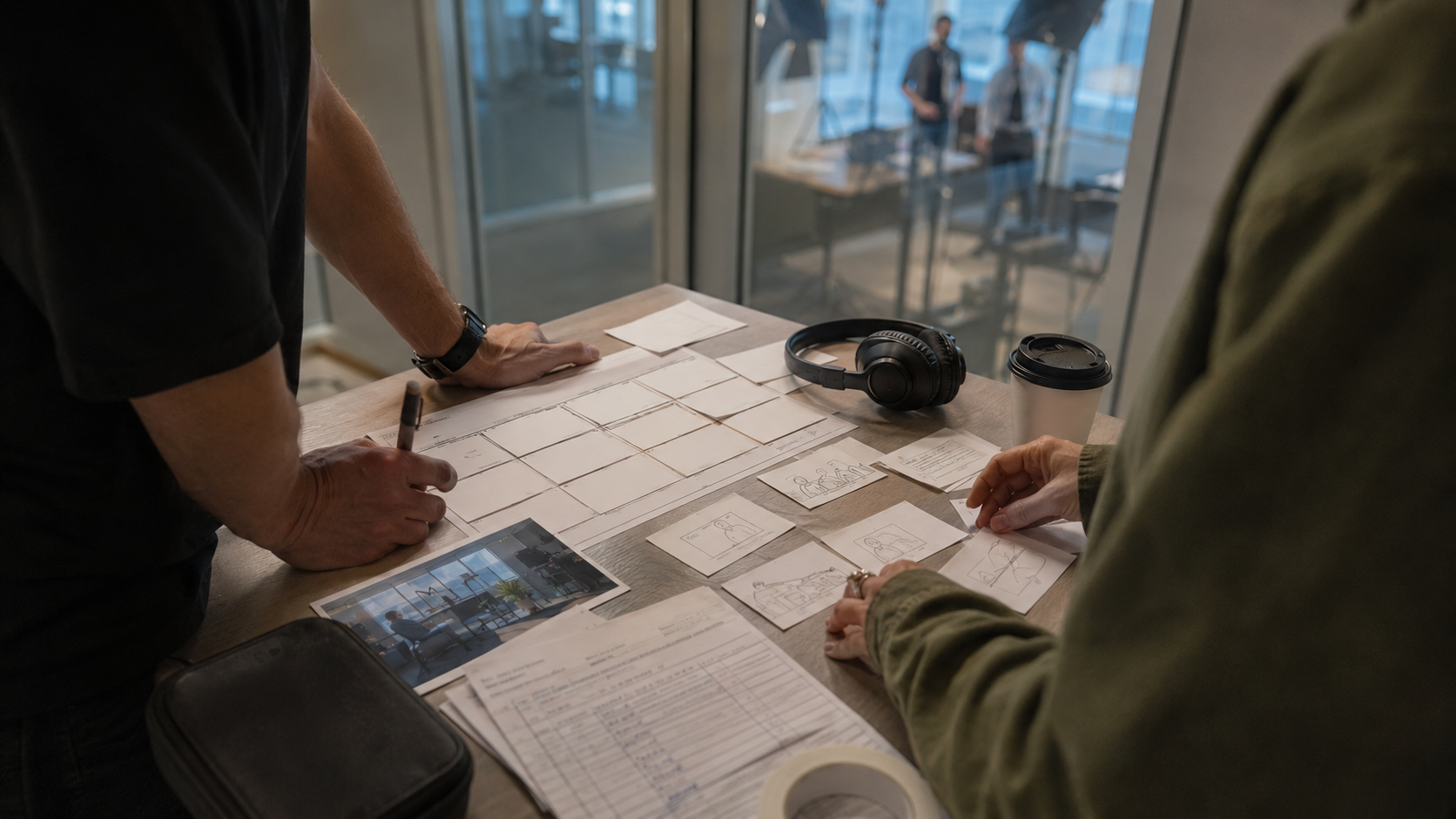
Depending on the project, preproduction may include creative development, scriptwriting, interview questions, shot lists, schedules, location scouting, permits, casting, crew coordination, equipment planning, wardrobe guidance, and travel logistics.
For an interview based corporate video, this stage may be relatively simple. We identify the people being interviewed, coordinate schedules, determine the best filming environment, prepare questions, and plan the supporting footage.
For a scripted commercial, the process can be much more involved. The concept and script must be approved. Locations or sets need to be secured. Actors may need to be cast. Props, wardrobe, art direction, and detailed shot planning all need to be addressed before the shoot.
Trying to shorten this stage too aggressively can create expensive problems on filming day. A thoughtful plan helps the crew work efficiently and gives the client confidence that everyone is working toward the same result.
Our preproduction checklist offers a closer look at the decisions that should be made before filming begins.
Stage 3: Production
Typical timeline: 1 to 3 days for many corporate projects
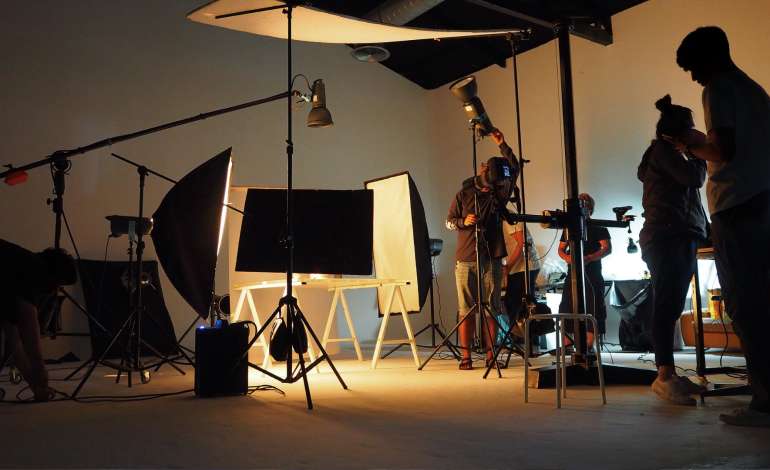
Production is the part everyone sees. The crew arrives, lighting and audio are set, cameras are prepared, interviews are conducted, and the planned scenes and supporting footage are captured.
Many Orlando corporate videos can be filmed in 1 full day. Projects involving several departments, multiple offices, large facilities, or different cities may need 2 or more days.
The number of filming days depends less on the final length of the video and more on what needs to be captured. A polished 90 second video may require interviews with 5 people, footage across a large facility, a drone, several setups, and detailed coverage of employees, customers, products, and processes.
This is why a short final video does not always mean a short production day.
A well organized filming schedule allows the team to capture more without making the day feel rushed. It also reduces disruption to employees and normal business operations.
Stage 4: Editing the First Draft
Typical timeline: 1 to 3 weeks
Once filming is complete, the footage moves into postproduction.
For an interview driven video, the editor first reviews the interviews and identifies the strongest statements. Those moments are shaped into a clear story before supporting footage, music, graphics, sound design, and color work are added.
For a scripted project, the editor follows the approved script and selects the strongest performances and visuals. More complex projects may also include animation, custom graphics, visual effects, extensive sound work, or several versions for different platforms.
Editing is much more than placing clips in order. The first draft needs to establish the right pace, emotion, message, and visual flow. Giving the editor enough time to build that foundation usually leads to a stronger video and a smoother review process.
Stage 5: Client Review and Revisions
Typical timeline: 1 to 2 weeks
The review stage is often the biggest variable in the entire corporate video production timeline.
After the first draft is presented, the client gathers feedback and provides a clear set of revision notes. Most projects include 2 review cycles, which is generally enough when the right people have been involved from the beginning.
Projects can slow down when feedback comes from several departments at different times or when a new decision maker enters late in the process. Conflicting notes can also create additional rounds of editing.
The best approach is to choose 1 person to collect internal feedback and provide the production team with a single organized response. This keeps the process clear and prevents the editor from working through competing directions.
Stage 6: Final Delivery
Typical timeline: 1 to 3 business days after final approval
Once the video is approved, the production team completes the final quality check and prepares the required files.
Delivery may include a main horizontal video for a website or presentation, vertical or square versions for social media, shorter cutdowns, captioned versions, or files formatted for streaming and broadcast.
It is important to identify these deliverables before filming. A video designed only for a horizontal website player may be framed differently than one that also needs to work vertically on social media.
Planning every version early helps protect the composition during filming and avoids surprises at the end.
What Can Make a Video Production Take Longer?
The production process itself is usually predictable. Delays tend to come from decisions, availability, and changes in scope.
Common timeline factors include:
- Waiting for script or concept approval
- Coordinating several executives or interview subjects
- Securing locations, permits, or property approval
- Casting actors or scheduling specialty crew
- Weather affecting outdoor or drone filming
- Adding new deliverables after production has started
- Receiving feedback from several departments separately
- Waiting for legal, compliance, sponsor, or leadership approval
- Requesting substantial story changes after the first edit
None of these issues are unusual. They simply need to be considered when setting a deadline.
Can Corporate Video Production Be Expedited?
Yes, some projects can move faster when the scope is focused and the client is ready to make decisions quickly.
An expedited schedule works best when:
- The concept and goals are already clear
- The main decision maker is involved from the start
- Interview subjects and locations are available
- The number of deliverables is limited
- Feedback can be returned within 1 or 2 business days
- The production and editing team has availability
A faster schedule may also require additional editing resources, overtime, or rush fees. More importantly, every person involved needs to understand the deadlines before production begins.
If the video is tied to a launch or event, we recommend contacting a production company as early as possible. Starting 6 to 8 weeks ahead gives most corporate projects enough room for thoughtful planning, filming, editing, and review without creating unnecessary pressure.
How to Keep Your Corporate Video on Schedule
Clients can do several things to help a project move smoothly:
- Identify the final decision maker early.
- Agree on the audience, message, and purpose before creative work begins.
- Confirm every required format and deliverable before filming.
- Make interview subjects and locations available on the agreed dates.
- Gather internal feedback into 1 clear set of notes.
- Respond to questions and approvals within the scheduled review window.
- Avoid adding new goals after production has started.
The goal is not to rush. It is to keep the project moving with clear decisions and realistic expectations.
When Should You Contact an Orlando Video Production Company?
For most corporate videos, reaching out 6 to 8 weeks before the desired launch date is a smart starting point. Larger campaigns, commercials, multiple location shoots, and projects involving several approvals should begin even earlier.
If your deadline is closer, it is still worth having a conversation. A focused scope and an experienced production team may be able to create a realistic plan based on current availability.
At NG Production Films, we help businesses move from an initial idea to a finished video with a clear process and honest expectations. Our Orlando team handles creative planning, filming, editing, and final delivery for corporate videos, testimonials, commercials, event content, and brand stories throughout Central Florida and beyond.
You can learn more in our complete Orlando video production guide, view examples of our recent work, or contact NG Production Films to discuss your goals and deadline.
Frequently Asked Questions
How long does it take to make a 2 minute corporate video?
A professionally produced 2 minute corporate video often takes about 4 to 8 weeks from planning through final delivery. The timeline depends on the number of interviews, filming locations, production days, graphics, deliverables, and approval process.
How far in advance should I book a video production company in Orlando?
Contacting a production company at least 6 to 8 weeks before your desired launch date gives you a comfortable planning window. Larger productions and projects tied to major events should be booked earlier when possible.
How long does it take to edit a corporate video?
The first edit of a typical corporate video may take 1 to 3 weeks. Additional time is needed for client feedback, revisions, final quality checks, and exports.
Can a corporate video be completed in 2 weeks?
It may be possible for a focused project with a simple scope, available crew, confirmed locations, and quick client approvals. More complex videos usually need additional time to protect the quality of the final result.
What causes the most delays in corporate video production?
The most common delays come from scheduling key people, waiting for approvals, receiving conflicting feedback, changing the scope, or adding deliverables after production begins.