
If you have ever looked into producing a video with a custom background — something beyond a plain wall or a basic office setting — you have probably run into two options: green screen and LED volume production.
Both can put your talent in front of virtually any environment. Both are used by professional production companies every day. But they are not the same, and the difference between them shows up clearly in the final product.
This is an honest, practical breakdown of how the two compare, where each one works best, and why a growing number of businesses are choosing LED volume production for their video content.
What Is Green Screen?
Green screen — technically called chroma key compositing — has been a staple of video and film production for decades. The concept is simple. Your subject is filmed in front of a flat green backdrop. In post production, that green color is digitally removed and replaced with whatever background image or footage you want.
It works. It has been used in everything from local news broadcasts to major Hollywood productions. And for certain applications, it is still a perfectly valid approach.
But green screen comes with a list of challenges that anyone who has worked with it knows well.
The lighting problem. To get a clean key in post production, your subject and your green backdrop both need to be lit very precisely and separately. If the lighting on your talent does not match the lighting in the background you are compositing in, the final image looks wrong. The shadows fall at the wrong angle. The color temperature does not match. Viewers may not be able to articulate exactly what is off, but they feel it.
Color spill. Green screen is notorious for casting a green hue onto subjects, especially around the edges of hair, loose clothing, and skin. Removing that spill in post production takes time, skill, and sometimes it just does not clean up completely.
Post production load. Every frame of green screen footage has to be composited in post. For a short video, that is manageable. For a longer project or one with multiple background changes, the post production hours add up quickly — and so does the cost.
Talent performance. This one is underrated. When a performer or interview subject is standing in front of a flat green wall, they are working in a visually sterile environment. They have to mentally imagine the background they are supposed to be in. For on camera talent who are not professional actors, that disconnection often shows in subtle but real ways.
What Is LED Volume Production?
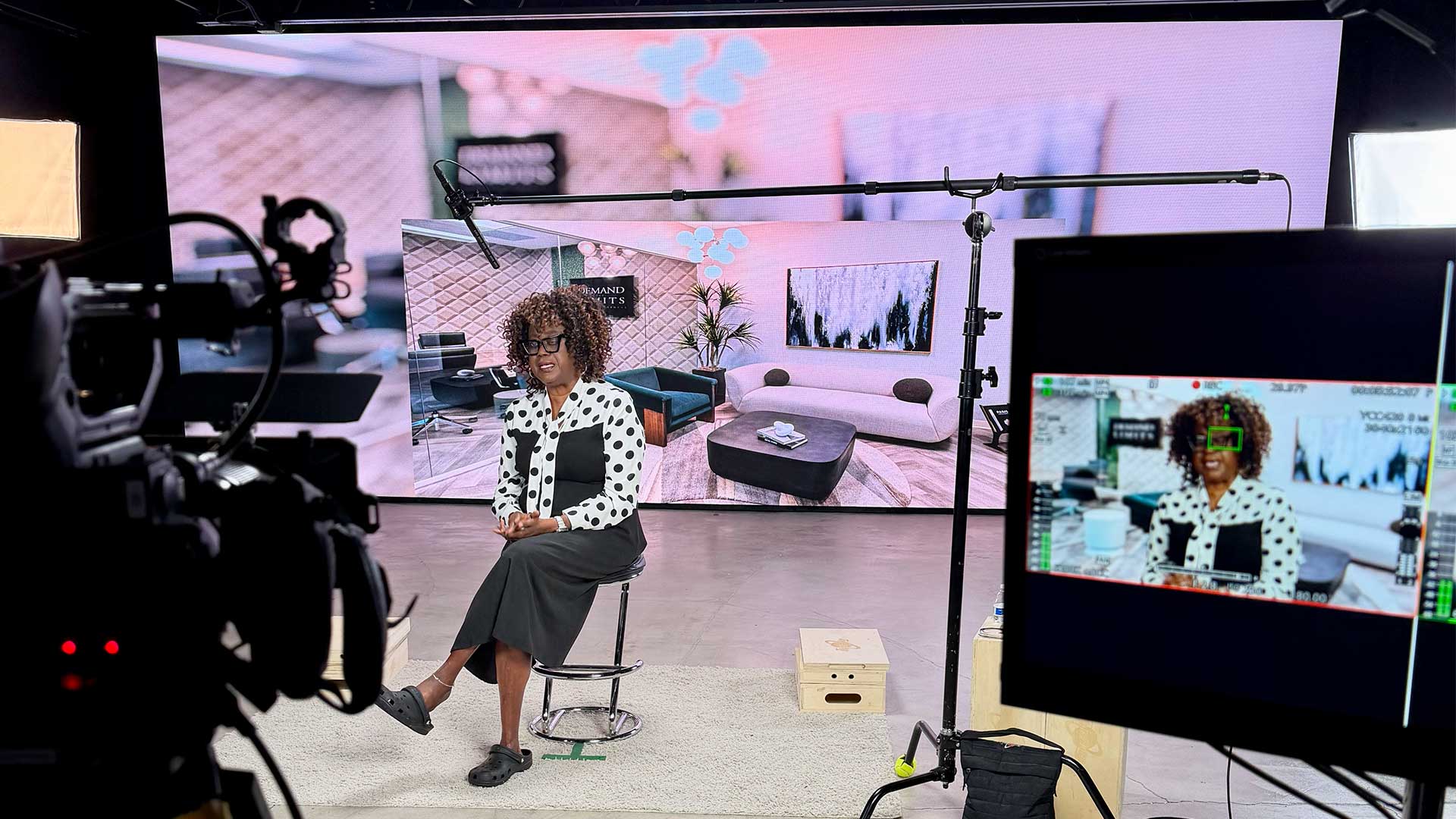
LED volume production replaces the green backdrop with a large, high resolution LED wall that displays your background content in real time. Instead of compositing in post, the environment is already there on set, wrapping around your subject with real light.
The background you see on the LED wall is the background that appears in the final footage. No compositing. No color spill. No guessing how the lighting will match. What you see on set is what you get in the final cut.
This approach became widely known when major productions began using it for complex visual environments. But the technology has since scaled down to boutique studio level, making it accessible to businesses producing commercial, corporate, and brand content.
The Key Differences Side by Side
Lighting and realism. This is the biggest distinction between the two. With green screen, your subject is lit independently from the background, which means the two elements have to be blended convincingly in post. With LED volume, the wall itself is a light source. It wraps natural, dynamic light around your subject in real time, creating reflections and shadows that match the scene. The result looks physically correct because it is physically correct.
Post production time. Green screen requires frame by frame compositing work. LED volume eliminates most of that. Your editor receives footage that is already complete, which shortens turnaround time and reduces post production costs.
On set experience. With LED volume, talent can see exactly where they are. A subject being interviewed in front of a professional office environment can see that environment and respond to it naturally. That authenticity translates directly into better performances and more engaging final footage.
Background flexibility. Both methods allow you to change backgrounds, but LED volume does it instantly on set. You can shift from one environment to another between takes in minutes without any additional post production implications. For productions that need multiple looks in a single shoot day, this is a significant advantage.
Cost structure. Green screen tends to have lower upfront studio costs but higher post production costs due to compositing time. LED volume tends to have a higher studio day rate but dramatically lower post production costs. For many projects, especially those with multiple background changes, the overall investment ends up being comparable — sometimes lower — with LED volume once post is factored in.
Complexity ceiling. For extremely complex visual effects work — massive sci fi environments, fully animated worlds, deep integration with CGI — high end green screen production with a major VFX team still has its place. But for the vast majority of business video content, corporate productions, commercials, interview formats, and brand films, LED volume is the superior choice.
When Green Screen Still Makes Sense
Being honest about this matters. Green screen is not obsolete.
If your production requires environments so complex or animated that they need to be built entirely in post, green screen may still be the right tool. If your budget is very limited and you have a skilled compositing team available, it can work. If the background change is simple and the production volume is low, green screen can be a practical option.
But for businesses that want a polished, professional result with efficient turnaround and a real on set experience, the limitations of green screen tend to create more problems than they solve.
When LED Volume Is the Right Call
LED volume production is the right choice when the quality of the final image matters, when you need multiple background environments in a single shoot day, when your talent or interview subjects are not professional performers, when post production timelines are tight, and when your brand requires a premium, consistent look.
It is particularly effective for corporate brand films, executive interviews, product showcases, healthcare and educational content, commercial spots, and any production where the environment your subject appears in needs to communicate something specific about your brand.
What This Looks Like in Practice
Consider a healthcare organization that needs to film a series of provider profiles. Filming on location in a clinical environment creates scheduling conflicts, noise issues, and logistical headaches. Green screen would require compositing each profile individually, and the artificial quality of the result may not hold up to the trust standards a healthcare brand needs to convey.
In an LED volume studio, you set the environment once — a clean, professional medical setting displayed on the wall — and film all of your providers back to back in a single controlled shoot day. The footage comes back from post quickly, the environment looks real, and the brand impression is exactly what it needs to be.
The same logic applies to real estate brands, technology companies, law firms, financial services organizations, and any other business where professional presentation and efficient production both matter.
The Bottom Line
Green screen is a tool that has served the industry well for a long time. But LED volume production delivers better results for most business video applications — better image quality, better performances, faster turnaround, and a production experience that is genuinely collaborative and enjoyable for clients.
If you are planning a video project and wondering which approach is right for your goals and budget, the answer usually comes down to one question: how much does the final image quality matter to your brand?
For most businesses, the answer is clear.
NG Production Films operates Orlando’s boutique LED volume studio in Orlando, FL. Our studio is built specifically for commercial, corporate, and brand video production — and our team manages the full process from concept through delivery.
Ready to see what LED volume production looks like for your project? Schedule a studio tour or a complimentary discovery call with our team.