
Customer testimonial videos have become one of the most powerful marketing tools available to businesses today. Whether you’re a healthcare provider, software company, manufacturer, professional service firm, or local business, prospective customers want proof that you can deliver on your promises.
They want to hear from real people.
They want to see genuine experiences.
And most importantly, they want to know they can trust you before making a decision.
Over the past 20 years, our team at NG Production Films has filmed hundreds of customer testimonials for organizations throughout Florida and across the country. From corporate headquarters and manufacturing facilities to healthcare organizations and conference events, we’ve learned one simple truth:
The most effective testimonial videos don’t feel like marketing.
They feel like honest conversations.
So what separates a testimonial video that builds trust from one that feels forced or scripted? Let’s take a closer look.
Why Testimonial Videos Continue to Outperform Traditional Marketing
Today’s buyers are more skeptical than ever.
They’ve seen countless advertisements, sales presentations, and marketing campaigns. While these efforts certainly have their place, consumers have become skilled at filtering out promotional messages.
What they can’t easily ignore is a real customer sharing a real experience.
When a prospective client sees someone describing a challenge they faced, the solution they found, and the results they achieved, it creates an immediate sense of credibility.
That’s why customer testimonial videos consistently outperform many other forms of content when it comes to building trust and influencing purchasing decisions.
People trust people.
The Biggest Mistake Companies Make Before Filming
One of the most common mistakes we see happens before the cameras are even unpacked.
Many organizations try to control the message too much.
They create lengthy scripts, provide overly detailed talking points, and ask customers to memorize specific responses.
The result is usually obvious.
The interview sounds rehearsed.
The delivery feels robotic.
The authenticity disappears.
Instead of scripting every word, we encourage clients to focus on the story they want to uncover.
The best testimonials come from genuine experiences, not memorized marketing language.
Choosing the Right Person Matters More Than the Camera
Many businesses spend time researching cameras, lighting equipment, and production styles.
While professional production absolutely matters, the person sitting in the interview chair matters far more.
The ideal testimonial participant is someone who:
- Had a real challenge before working with your company
- Experienced measurable results
- Communicates comfortably and naturally
- Is genuinely enthusiastic about their experience
They do not need media training.
They do not need acting experience.
In fact, some of the strongest testimonials we’ve ever filmed came from people who were initially nervous about being on camera.
Their authenticity became their greatest strength.
Creating a Comfortable Environment
Most people are not professional speakers.
Even successful executives can become nervous when a camera lens is pointed directly at them.
One of the most important responsibilities of an experienced production team is creating an environment where interview subjects feel comfortable.
Before we begin filming, we spend time building rapport and explaining the process. We make it clear that there are no perfect answers and no pressure to get everything right on the first take.
The goal isn’t perfection.
The goal is honesty.
Once people stop worrying about the camera, their real personality begins to shine through.
That’s when the strongest moments happen.
Why Great Questions Produce Great Answers
A successful testimonial interview is rarely about asking dozens of questions.
It’s about asking the right questions.
Rather than asking someone to explain why a company is great, we focus on helping them tell their story.
Some of our favorite questions include:
What challenge were you facing before working with the company?
This establishes the problem.
Why did you decide to move forward?
This reveals the decision-making process.
What was your experience like during the project?
This highlights customer service and communication.
What results have you seen since then?
This demonstrates value.
Would you recommend them to someone else?
This creates a natural conclusion.
These questions encourage storytelling instead of sales pitches.
Viewers connect with stories.
The Power of Storytelling
Many companies focus heavily on features and services.
While those details are important, they are rarely what viewers remember.
People remember stories.
A strong testimonial follows a simple framework:
- Problem
- Solution
- Outcome
For example:
A company struggles with recruiting.
They invest in a video strategy.
Applications increase and hiring becomes easier.
That story is far more compelling than simply saying, “They did a great job.”
Stories create emotional connection.
Emotional connection creates trust.
Trust drives action.
Why Professional Production Still Matters
Authenticity does not mean poor production quality.
In fact, professional production helps support authenticity by eliminating distractions.
Imagine watching a fantastic interview where the audio is difficult to hear, the lighting is harsh, and the camera shakes throughout the entire video.
The message becomes harder to absorb.
Professional production ensures the audience focuses on the story rather than technical issues.
Key elements include:
- Clean, professional audio
- Proper lighting
- Thoughtful composition
- Multiple camera angles
- Consistent color grading
- Smooth editing
These elements work together to support the interview without overpowering it.
Why We Often Film With Two Cameras
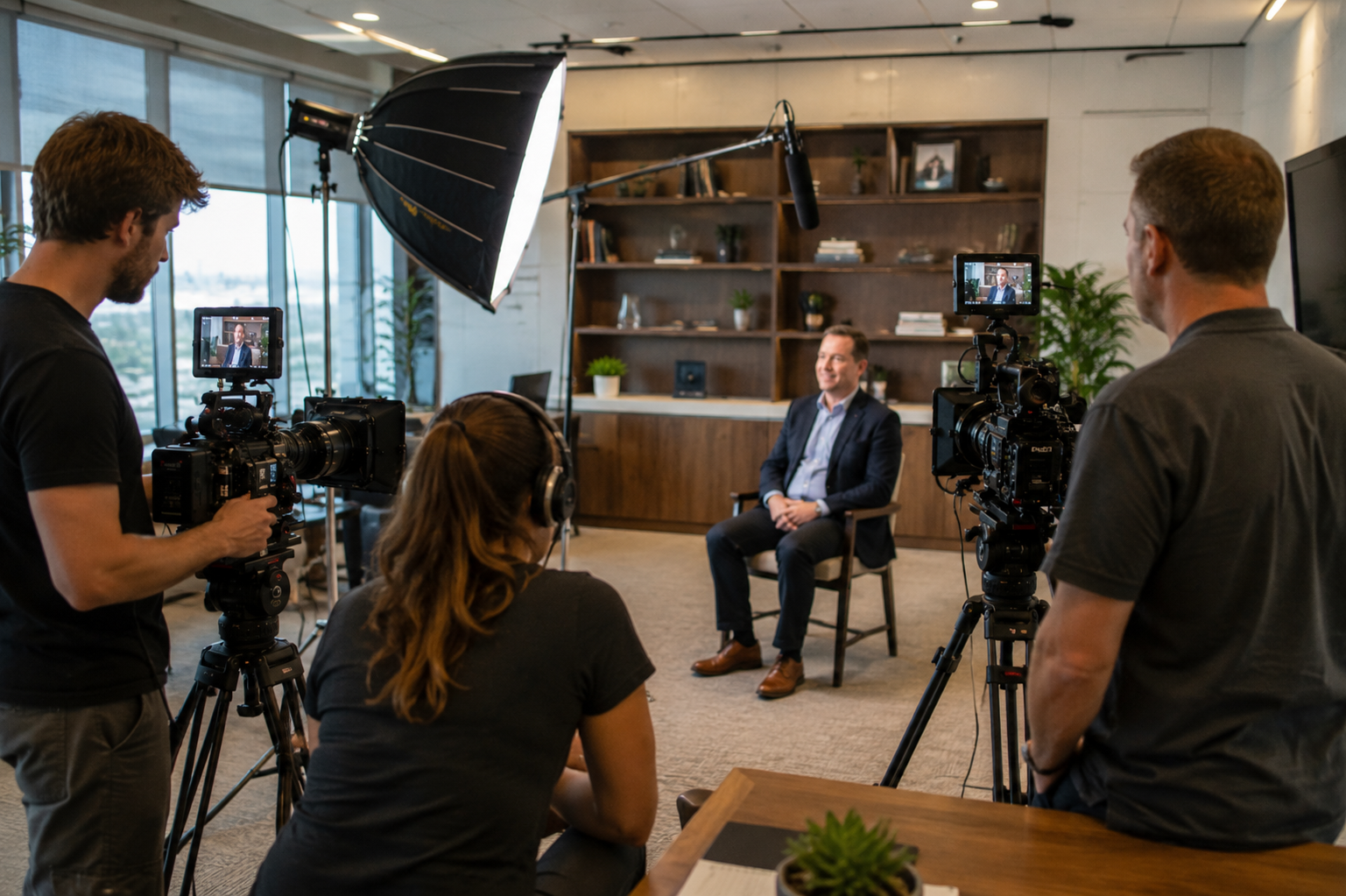
Many clients ask why we frequently use two cameras during testimonial interviews.
The answer is simple.
Two cameras provide flexibility.
A wider shot establishes the environment while a tighter shot captures emotion and detail.
This approach allows editors to seamlessly remove pauses, tighten responses, and maintain visual interest throughout the video.
More importantly, it helps the final interview feel natural and engaging.
The Role of B Roll in Testimonial Videos
One of the biggest differences between amateur and professional testimonial videos is the use of B roll.
B roll refers to supplemental footage that supports the interview.
For example:
- Employees working
- Customer interactions
- Products being used
- Manufacturing processes
- Team collaboration
- Office environments
These visuals help viewers see the story rather than simply hear it.
They add context, create energy, and improve retention.
A testimonial without B roll often feels static.
A testimonial with strong supporting visuals feels alive.
How Long Should a Testimonial Video Be?
There is no universal answer.
The ideal length depends on the intended use.
Generally speaking:
- Website testimonials: 60 to 120 seconds
- Sales presentations: 2 to 3 minutes
- Case study style videos: 3 to 5 minutes
- Social media clips: 15 to 60 seconds
The key is keeping only the strongest moments.
Viewers don’t need every answer.
They need the most impactful answers.
Here is an example of a powerful interview we produced for Space Coast Habitat for Humanity, which earned an Emmy® nomination.
Industries That Benefit Most From Testimonial Videos
Almost every industry can benefit from testimonials, but we see particularly strong results in:
Healthcare
Patients want confidence and reassurance before choosing a provider.
Professional Services
Trust is critical when selecting consultants, attorneys, accountants, or advisors.
Software and Technology
Customer success stories help simplify complex solutions.
Manufacturing
Real customer experiences help demonstrate value and reliability.
Hospitality and Tourism
Guest experiences often influence future booking decisions.
Education and Nonprofits
Personal stories create emotional connections and strengthen credibility.
Where Businesses Should Use Testimonial Videos
Many companies make the mistake of filming a testimonial and only placing it on a single webpage.
A strong testimonial should be leveraged across multiple platforms.
Some of the best locations include:
- Homepage
- Service pages
- Landing pages
- Sales presentations
- Email campaigns
- Social media
- Trade show displays
- Proposal presentations
- Recruitment campaigns
A single testimonial can often generate months of valuable content.
Authenticity Always Wins
At the end of the day, viewers aren’t looking for perfection.
They’re looking for honesty.
The strongest customer testimonial videos aren’t the ones with the biggest budgets or the most elaborate production setups.
They’re the ones that tell genuine stories about real people experiencing real results.
When thoughtful interviewing, professional production, and authentic storytelling come together, testimonial videos become one of the most effective tools a business can use to build trust and influence buying decisions.
After filming testimonial videos for organizations throughout Orlando, Central Florida, and beyond, one lesson remains consistent:
People don’t connect with marketing messages.
They connect with people.
And that’s exactly what makes customer testimonial videos so powerful.