

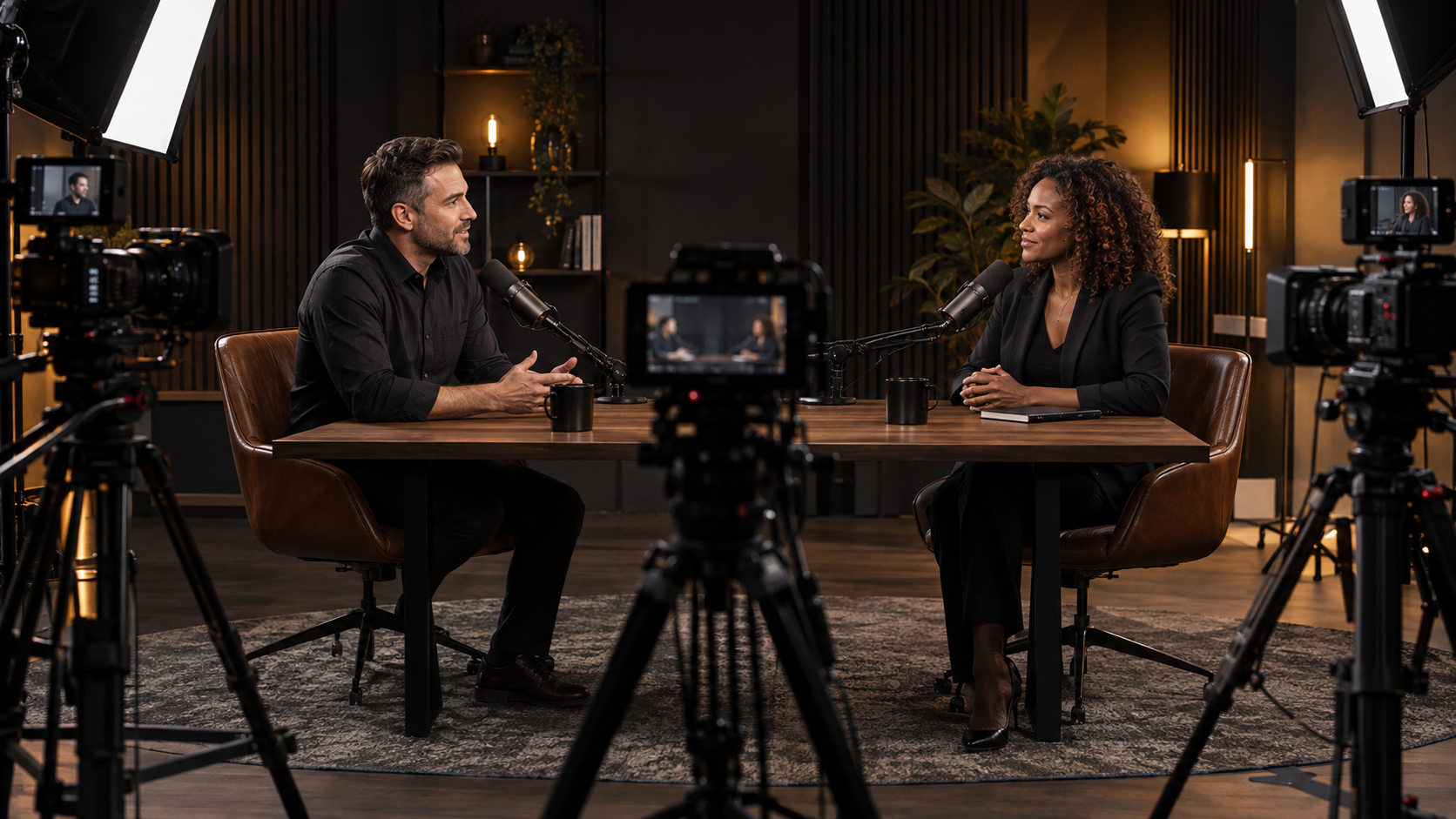
Video podcasts have become one of the most effective ways for businesses, organizations, and industry experts to share ideas and build a stronger connection with their audience. A podcast can create long form content for YouTube, shorter clips for social media, and useful material for websites, email campaigns, and future marketing.
However, recording a professional video podcast involves much more than placing a few cameras in a room and pressing record. The best results come from thoughtful planning before the host and guests ever sit down.
If you are preparing for a multicamera podcast recording, here are the most important decisions to make before production day.
1. Decide How Many Episodes You Want to Record
One of the biggest advantages of planning a dedicated recording day is the ability to capture several episodes during the same session. This can give your team weeks or even months of content without scheduling a separate production for every episode.
Start by deciding how many episodes you want to complete and how long each conversation should be. A 20 minute episode requires a very different schedule than a 60 minute discussion.
You should also allow time between episodes for guest changes, microphone adjustments, breaks, wardrobe touchups, file checks, and quick conversations about the next topic. Trying to fit too much into the schedule can make the hosts feel rushed and affect the quality of the discussion.
In our experience, it is better to build a realistic schedule and record strong conversations than to squeeze in an extra episode simply because time appears available on paper.
2. Choose the Right Number of Cameras
A multicamera setup gives an editor more flexibility and makes the finished podcast more engaging to watch. Instead of remaining on one wide shot for the entire conversation, the edit can move naturally between speakers and reactions.
A typical 3 camera podcast setup may include:
- A wide shot showing everyone
- A dedicated angle for the host or hosts
- A dedicated angle for the guest
The exact setup depends on the number of people participating, the shape of the room, and the style of the show. A conversation with 2 people may need a different camera arrangement than a panel with 3 or 4 participants.
The goal is not simply to use more cameras. Every angle should serve a purpose and work together visually.
3. Treat Audio as a Top Priority
People may forgive a small visual imperfection, but poor audio can make an entire podcast difficult to watch. Each participant should have a dedicated professional microphone so their voice remains clear and consistent throughout the conversation.
Before recording, the production team should test every microphone, monitor sound levels, and listen for air conditioning, refrigerators, hallway activity, nearby conversations, and other background noise. Even a beautiful room can be a poor recording location if the sound cannot be controlled.
Audio should also be monitored throughout the session. Clothing can rub against a microphone, batteries can run low, and a guest may begin speaking more quietly as the conversation continues. Catching those issues during recording is far easier than trying to repair them afterward.
4. Select a Location That Works on Camera and in Real Life
The right location needs to look professional, sound controlled, and provide enough space for cameras, lighting, audio equipment, crew members, and the people appearing on screen.
Hotel suites, conference rooms, offices, studios, and event spaces can all work, but each comes with different considerations. A hotel suite may look comfortable but offer limited room for equipment. A conference room may have plenty of space but include reflective walls or noisy air conditioning. A studio provides more control but may require guests to travel away from an event or meeting.
Before selecting a location, consider:
- Room size and ceiling height
- Background appearance
- Outside noise and room echo
- Available power
- Access for loading equipment
- Parking and building restrictions
- Time allowed for setup and breakdown
Photos and videos of the room can help during planning, but a location walkthrough is valuable for more complex productions.
5. Allow Enough Time for Setup and Testing
A professional multicamera podcast setup requires time. Cameras need to be positioned and matched, lighting needs to be shaped, microphones need to be placed, and the entire system needs to be tested before the first episode begins.
Depending on the room and production requirements, the crew may need to arrive 1 to 2 hours before the scheduled recording time. Larger setups may require even longer.
Guests should receive a separate arrival time so they are not waiting while equipment is still being assembled. A short buffer also gives everyone time to settle in, review the episode topic, silence phones, and handle any final wardrobe or microphone adjustments.
6. Plan the Visual Style Before Recording
Your podcast should feel connected to your brand. That does not mean every surface needs a logo. The set, lighting, furniture, colors, and camera framing should create a consistent visual identity that feels intentional.
Some productions benefit from a clean corporate environment. Others feel more natural with comfortable seating, practical lamps, artwork, plants, or branded elements placed subtly in the background.
It is also important to consider how the framing will work for both full episodes and vertical social content. If social clips are part of the deliverables, the cameras should be positioned with that future crop in mind.
7. Prepare Hosts and Guests
The strongest podcast conversations usually sound natural, but they still require preparation. Hosts should have a clear episode goal, a logical list of talking points, and enough flexibility to follow an interesting answer.
Guests should know the general subject, expected recording length, location, arrival time, and wardrobe recommendations. They do not necessarily need every question in advance, but they should understand the direction of the conversation.
Encourage everyone to speak in complete thoughts, avoid talking over one another when possible, and pause briefly if an answer needs to be restarted. These small habits make the editing process smoother without making the conversation feel overly scripted.
8. Define Every Deliverable in Advance
Recording the podcast is only one part of the project. Before production begins, decide exactly what you want to receive afterward.
Possible deliverables include:
- Complete edited episodes
- A separate question and answer segment
- Short vertical clips for social media
- Promotional teasers
- Audio only versions
- Captions or subtitles
- Branded opening and closing graphics
- Individual camera files or complete raw footage
You should also confirm the expected episode length, video format, review process, delivery timeline, and number of revisions. Defining these items early allows the production and editing approach to be designed around the final goal.
9. Think Beyond the Full Episode
One recording day can produce far more than a collection of complete podcast episodes. Strong moments can become short videos for Instagram, LinkedIn, YouTube Shorts, and other platforms. Quotes can support written posts, email campaigns, and website content.
Planning these additional uses before recording helps the crew capture the right framing and gives the host opportunities to create concise moments that work well as individual clips.
This is where a well planned podcast production can become a complete content library rather than a single piece of media.
A Successful Podcast Starts Before Recording Day
The best multicamera podcast productions feel relaxed on screen because the important decisions were handled in advance. When the cameras, audio, lighting, schedule, location, and deliverables are properly planned, the host and guests can focus on having a meaningful conversation.
NG Production Films helps businesses and organizations plan and record professional video content in Orlando and throughout Central Florida. Our team can provide multicamera production, professional lighting and audio, onsite recording, and post production tailored to the needs of each project.
Learn more about working with our Orlando video production company or contact our team to discuss your next podcast recording.