
There is a version of a testimonial video that every business owner has seen and quietly cringed at. Someone sitting stiffly in front of a webcam, reading something that sounds like it was lifted directly from a Google review, shot in a conference room under fluorescent lights with the HVAC kicking in the background. It checks the box. It exists. And it does almost nothing.
Then there is the other kind. The one where you find yourself watching longer than you planned. Where the person on screen feels like someone you could actually call, and by the time the video ends you are already thinking about reaching out to whoever made it.
The difference between those two outcomes is not luck. It is intention, process, and craft. And for businesses across Central Florida that are serious about using video as a genuine sales and marketing tool, understanding that difference matters.
The Real Job of a Testimonial Video
Before anything else, it helps to get clear on what a testimonial video is actually supposed to do. On the surface it seems obvious. A happy client says nice things. Potential clients see it. Trust is built. But that description glosses over the mechanics of why it works when it works.
What a well produced testimonial really does is collapse the distance between a stranger and a decision. When someone is evaluating a company they have never worked with, they are managing risk. Every piece of information they take in is being filtered through the question: can I trust these people? Written reviews help. Case studies help. But video does something the others cannot, because it gives the viewer a real person to connect with. Body language, tone of voice, the way someone pauses before they answer a question, all of it communicates something that text simply cannot.
The moment a viewer sees someone who looks like them, talks like them, or operates a business at a similar scale, something shifts. The decision no longer feels like a leap. It feels like following advice from someone who has already been where they are standing.
That is the job. And it only happens when the production supports it rather than getting in the way of it.
Why So Many Testimonial Videos Miss
Most testimonial videos underperform for one of three reasons.
The first is poor pre production. The subject had no idea what they were going to be asked, so they showed up unprepared and nervous. The questions were generic. The conversation never got past surface level compliments and into the actual story that would have made a viewer lean in.
The second is technical quality that undercuts credibility. Bad audio is the biggest offender. People will forgive a lot visually, but the moment they have to work to understand what someone is saying, they check out. Harsh lighting, cluttered backgrounds, and shaky framing all send the same subconscious message: this company does not take quality seriously. That is the opposite of what a testimonial is supposed to communicate.
The third is a lack of story shape. A great testimonial is not a list of compliments. It is a before and after. It has tension, context, and resolution. Without that arc, even the most enthusiastic client sounds forgettable.
What the Process Should Actually Look Like
The best results come from treating a testimonial shoot less like a recording session and more like a conversation that has been thoughtfully set up in advance.
That starts with preparation. Before any camera is pointed at anyone, a good production team will work to understand the story worth telling. Who is this client? What problem were they trying to solve before they hired you? What hesitations did they have? What changed after working together? Those details become the backbone of the interview, and when a subject feels guided through a real conversation rather than quizzed under bright lights, the footage reflects it.
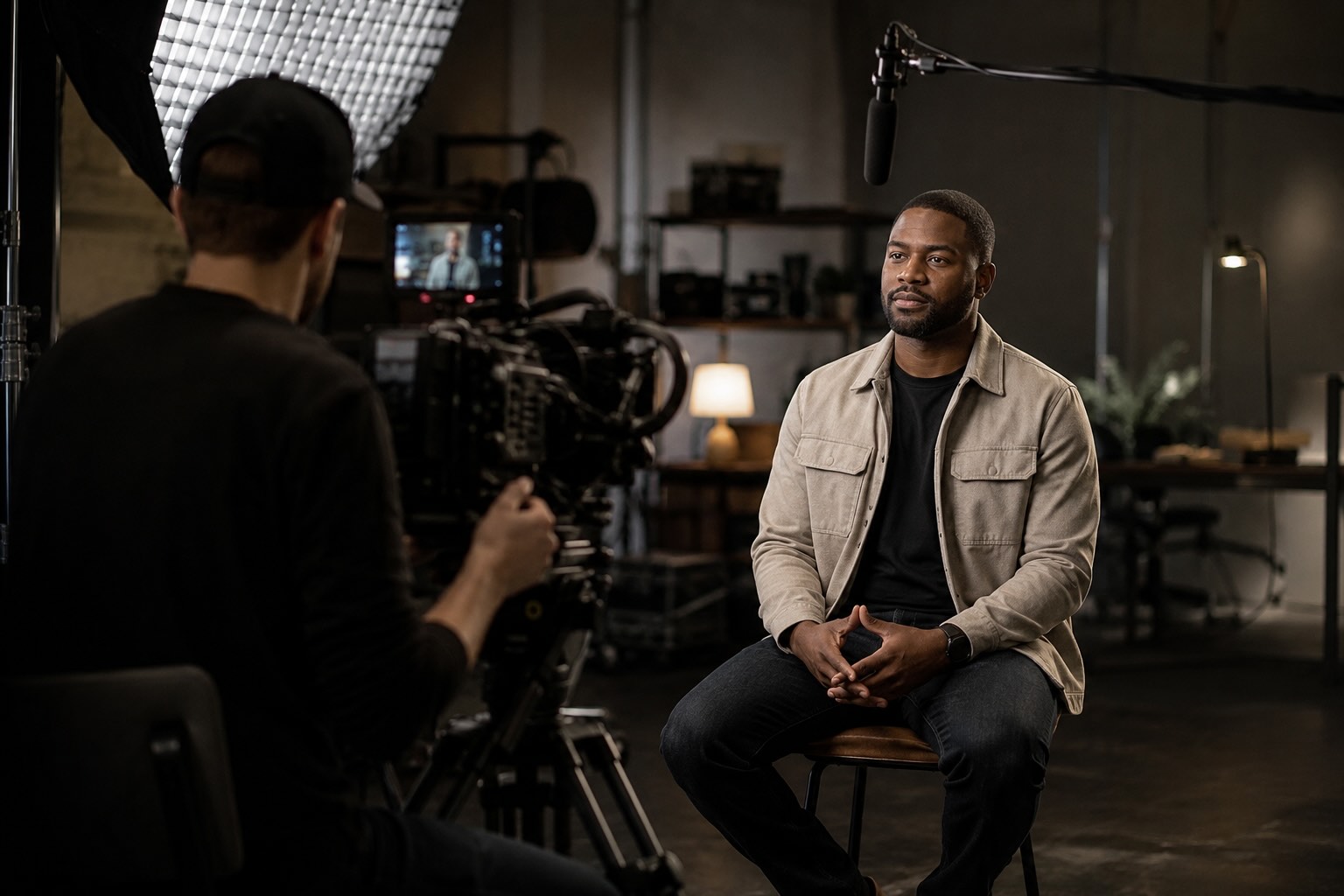
Location matters more than most clients expect. A thoughtfully chosen environment, whether that is a polished studio setup, a company workspace, or an on site location that adds context to the story, does a lot of quiet work in terms of production value and brand perception. It tells the viewer something about both companies before anyone says a word.
The interview itself should feel like a conversation, not a deposition. A skilled interviewer draws out honest, specific answers. Specificity is everything. “They were great to work with” is useless on camera. “We had a deadline that got moved up by two weeks and they figured it out without making it our problem” is a story. Getting to that level of detail is a skill, and it is one that separates experienced production teams from people who simply point a camera and hit record.
Post production is where all of it either comes together or falls apart. Pacing, music, color grading, audio cleanup, the careful selection of which moments make the cut, these are not afterthoughts. They are where the emotional weight of the video gets shaped. A testimonial that runs 90 seconds and feels tight and purposeful will outperform a three minute version of the same interview that meanders.
Example video testimonial we’ve produced:
When Businesses Treat This as a Strategy, Not a Project
One of the patterns we see consistently among companies that use video well is that they do not think of a testimonial as a one time deliverable. They treat it as an ongoing content asset they are building over time.
A single testimonial video is valuable. A library of them is something else entirely. When a prospective client can browse through multiple stories from companies in their own industry, or at their own scale, or dealing with the same specific challenge they are facing, the sales conversation changes. Instead of you telling them why they should hire you, your existing clients are doing it. And that is a fundamentally more persuasive dynamic.
This approach also creates flexibility. A full length testimonial for the website. A shorter cut for social. A 15 second highlight for a pitch deck or a proposal. When the source material is strong, it can be shaped into multiple assets that serve different parts of the marketing and sales funnel without requiring a new shoot every time.
What Case Study Videos Add to the Mix
For businesses selling complex services or higher ticket engagements, a case study video takes the testimonial format and expands it. Rather than relying solely on a talking head interview, a case study weaves in supporting footage, context, and visuals that illustrate the story being told.
Think of a construction company walking through a project they completed, with the client on camera at the finished site. Or a healthcare organization showing the environment their patients experience while a provider describes the philosophy behind it. Or a technology company letting their client explain the problem they had while b roll shows the platform in action.
These are not just testimonials. They are proof of work. And for buyers making significant decisions, that level of specificity and transparency builds a degree of confidence that almost nothing else can replicate.
What to Look for When Choosing a Production Partner
If you are evaluating video production companies for this kind of work, the testimonial and case study category is genuinely one of the best tests of a team’s overall capability. It requires strong pre production instincts, real skill in front of the camera with interview subjects, technical execution across lighting and audio, and a post production team that understands storytelling, not just editing.
Beyond the craft side, the right partner will want to understand your goals before they talk about gear or timelines. How will this be used? Who is the intended viewer? What decision are you trying to help them make? Those questions shape everything, from how the video is framed to how long it needs to be and what it should leave the audience feeling.
The Businesses That Invest in This Early Win Later
Video production is one of those categories where the gap between a well made piece and a poorly made one is immediately visible to anyone watching. Clients and prospects have seen enough content at this point to know the difference, even if they cannot articulate exactly why one video feels trustworthy and another does not.
Companies in the Orlando area that are building a real video content strategy around testimonials and case studies are creating something durable. A well produced testimonial from a credible client does not go stale the way a social post does. It earns trust consistently, for months and years after the shoot day, every time a new prospect lands on your website or receives a proposal and wants to know whether you are the real thing.
Getting that right is worth doing properly.
NG Production Films is a full service video production company based in Altamonte Springs, Florida. We work with businesses across the greater Orlando area to produce testimonial videos, case study content, and brand storytelling that actually moves the needle. If you are ready to put your best clients on camera and let their stories do the work, we would love to talk. Contact us here